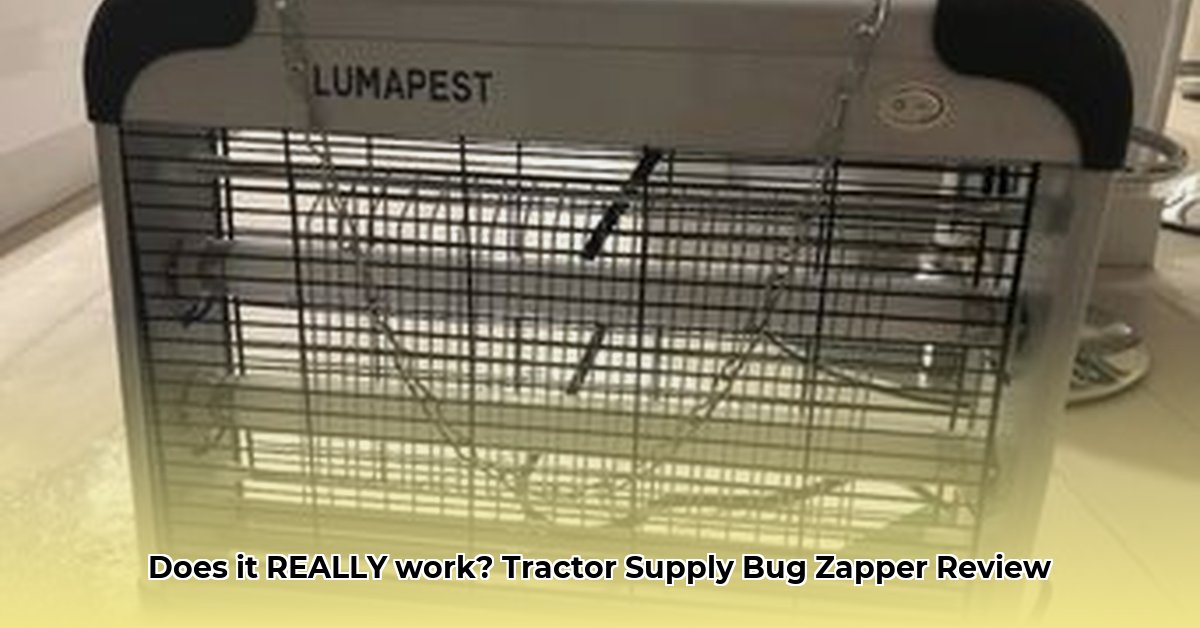
Summer evenings shouldn't be a battleground against buzzing pests. But when mosquitoes, flies, and moths invade, you need a solution that's both effective and environmentally friendly. This review examines the Bell & Howell bug zapper from Tractor Supply, assessing its efficacy, sustainability, and overall value. We'll explore whether it truly delivers on its promises of sustainable pest control. For pet owners dealing with parasites, check out this resource on pet parasite control.
Product Overview: The Bell & Howell Bug Zapper
The Bell & Howell bug zapper, available at Tractor Supply, uses a 2800-volt grid (a high-voltage electric grid that kills insects) and a UV light to attract and eliminate flying insects. Its target insects include mosquitoes, moths, and flies. While seemingly simple, its actual effectiveness and environmental impact require closer scrutiny.
Effectiveness: Does it Deliver on its Promises?
Manufacturer claims suggest a high kill rate for flying insects. However, user reviews present a mixed picture. Many report a noticeable reduction in flying insects in smaller, enclosed areas like patios. Conversely, others find it ineffective or only marginally helpful. Importantly, these are largely anecdotal; rigorous scientific data validating these claims is lacking. Furthermore, the zapper's effectiveness is limited to flying insects; it's ineffective against crawling insects like ants or spiders. A comparison to other methods, such as pheromone traps, reveals a need for more comprehensive testing to understand its true efficacy. Does the zapper truly represent a significant improvement over traditional methods like swatting bugs, or is the convenience simply outweighing marginal gains in effectiveness?
Sustainability Analysis: Environmental Impact
The most significant drawback is the lack of transparency regarding energy consumption and bulb lifespan. This crucial information is absent from the product description, hindering a comprehensive assessment of its environmental impact. Frequent bulb replacements would significantly increase the carbon footprint. Furthermore, disposing of the dead insects requires a thoughtful approach, beyond simply discarding them in the trash. Composting might be an option, depending on local regulations, but it requires research and careful consideration. The UV light also raises concerns about potential light pollution, especially with multiple units in use. A comparison with truly sustainable alternatives, like pheromone traps or natural repellents, highlights the zapper's significant environmental limitations.
Cost Analysis: The Total Cost of Ownership
While the initial purchase price is relatively low, long-term costs are a critical factor. Bulb replacements add to the overall cost, along with the ongoing energy consumption (the amount of which is currently unknown). Calculating these running costs, and then comparing them to the lifetime cost of alternative pest control methods, provides a more accurate assessment of its true value. This long-term cost analysis is crucial for a truly informed purchase decision.
Pros and Cons: A Balanced Perspective
Here's a concise summary of the advantages and disadvantages:
Pros:
- Relatively inexpensive initial cost.
- Easy to use.
- Eliminates some flying insects.
- Available at Tractor Supply.
Cons:
- Unclear energy consumption and bulb lifespan.
- Mixed effectiveness; lack of scientific data.
- Potential for light pollution and environmental impact.
- Requires responsible insect disposal.
- Ineffective against crawling insects.
Final Verdict: Is it a Sustainable Solution?
The Bell & Howell bug zapper offers a short-term solution for some flying insects, but its sustainability is questionable. The lack of transparency regarding energy use and long-term maintenance costs, combined with its limited effectiveness and environmental impacts, prevents us from recommending it as a truly sustainable pest control solution. While it might supplement other methods, it shouldn't be considered a primary, sustainable solution.
Recommendations: Improving the Product and Responsible Use
For improvement, the manufacturer needs to provide comprehensive data on energy use and bulb lifespan. Independent testing is crucial to assess its environmental impact fully. Consumers should consider alternative methods for a holistic pest control strategy and prioritize responsible disposal of the dead insects and the unit itself at the end of its life. Remember: sustainable pest control requires collective responsibility from manufacturers and consumers alike.